
written by idkblanco | 11 min read
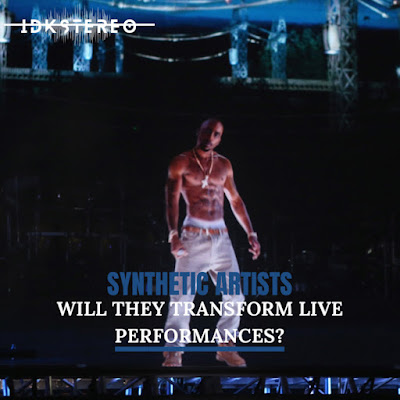
Last month, Dan Runcie, founder of Trapital, sat down with Venice Music CEO and co-founder, Troy Carter, during the Trapital summit. Towards the end they predicted what the next revenue driver for music will be after streaming — synthetic artists. It did not come to much surprise — remember when 2Pac’s hologram performed alongside Snoop Dogg at Coachella in 2012? Or more recently, when Swedish pop band ABBA performed as digital avatars during their ABBA Voyage concert series in 2022? This proved groundbreaking, blurring the lines between physical and digital. Was this foreshadowing the next frontier in live entertainment?
Troy Carter believes that artificial intelligence (AI) and holographic technology will create a new wave of synthetic artists. I am one who is for the embrace of technology; however, could we be heading towards a future where audiences will not be able to differentiate between AI-generated and actual performers — and still be okay with that? I cannot help but wonder about both the thrilling possibilities and significant challenges this holds.
What are synthetic artists?
Synthetic artists are digitally created performers who combine AI, advanced holographic imaging, and other technologies to simulate the presence and abilities of human artists. These entities may exist as virtual avatars, humanoid robots, or entirely constructed beings capable of producing and performing music, dance, or other creative outputs.
Unlike traditional human artists, synthetic artists can be programmed to generate music, visuals, or choreography autonomously using AI-driven algorithms. They often blend machine learning with vast datasets of artistic styles, enabling them to produce unique content tailored to audience preferences. Performances by synthetic artists leverage innovative holography, allowing lifelike, three-dimensional projections on stage that appear physically real.
These artists challenge conventional notions of creativity and performance, operating without human limitations such as fatigue or scheduling constraints. They can deliver flawless, repeatable performances while adapting to audience interactions, creating deeply immersive and customisable live experiences. By merging technology, artistry, and performance, synthetic artists represent a new era in entertainment — blurring the boundaries between human creativity and artificial innovation.
Economic benefits and opportunities
Synthetic artists present significant opportunities for musicians and event organisers by offering scalable and cost-effective alternatives to traditional performances. Unlike human artists, synthetic counterparts can perform virtually anywhere without the need for travel, physical stage setups, or extensive support crews. This scalability allows performances to reach global audiences at a fraction of the cost, democratising access to live music and expanding the industry’s economic potential.
For musicians, synthetic tools like AI-driven music production platforms lower barriers to entry, enabling independent creators to produce high-quality tracks without requiring extensive studio resources. Synthetic artists also open the door to diverse revenue streams. Licensing and streaming income can continue indefinitely, reaching niche audiences worldwide. Digital merchandise tied to performances or branding has also proven lucrative, with the global NFT market surpassing $40 billion in 2021, much of it originating in the arts sector. Holographic concerts, such as ABBA’s Voyage, further demonstrate the earning potential of synthetic performances, with the series contributing over £1.4 billion to the UK economy since its inception in 2022.
Event organisers also benefit from the versatility and adaptability of synthetic artists. Virtual performances can bypass geographical limitations, bringing music to previously inaccessible regions and boosting global audience reach. AI-powered performances offer dynamic personalisation, analysing audience preferences to adapt setlists or visuals in real time, enhancing the overall experience and fostering repeat attendance. This ability to tailor performances to audience demographics increases customer satisfaction and ticket sales while simultaneously reducing production costs by up to 70% compared to traditional live tours.
Despite these advantages, the integration of synthetic artists raises concerns about market saturation and the potential displacement of human performers. The low cost of producing synthetic content could lead to an oversupply, reducing the perceived value of performances. Moreover, human artists face increasing competition as synthetic performers become more prevalent. However, collaborations between humans and synthetic artists present opportunities for mutual growth, allowing traditional talent to leverage technological innovations while maintaining artistic authenticity.
The economic impact of synthetic artists is clear. The global AI in music market is projected to grow from $1.03 billion in 2023 to $2.50 billion by 2028, reflecting the growing adoption of these technologies in music creation and distribution. Virtual performances not only reduce costs but also maximise profit margins, demonstrating the financial efficiency of this evolving model. By embracing these opportunities, musicians and event organisers can unlock new markets, enhance audience engagement, and redefine the economic dynamics of the music industry.
Cultural and social impact
The cultural and social impacts of synthetic artists are multifaceted, offering profound shifts in how art is created, consumed, and valued. By blending AI, holography, and creative programming, synthetic artists challenge conventional ideas of authenticity, inclusivity, and cultural representation, leaving a lasting imprint on both artistic traditions and societal norms.
One of the most immediate cultural shifts is the redefinition of authorship and creativity. Traditionally, art has been a deeply human endeavour, rooted in personal experience and emotion. Synthetic artists, however, operate within parameters defined by their programming and training data. This raises questions about whether their outputs are truly “creative” or merely algorithmic recombinations of existing cultural works. Such debates have parallels in the visual arts, where AI-generated pieces challenge the traditional understanding of artistic genius and originality. As synthetic artists proliferate, society must grapple with the implications of replacing human artistic expression with algorithmic mimicry.
Synthetic artists also have the potential to democratise cultural representation. By programming AI to draw from diverse datasets, developers can introduce audiences to styles and influences that might otherwise be overlooked. This creates opportunities for greater inclusivity in the music and performance arts landscape, where under-represented voices can be amplified through technology. However, the reverse can also occur; biases within datasets might reinforce stereotypes or homogenise global cultural outputs, creating a risk of cultural flattening.
The social impact extends to how audiences engage with synthetic performances. Unlike human artists, who are constrained by physical and temporal limits, synthetic artists can provide continuous, highly personalised entertainment. They cater to the growing demand for on-demand experiences while challenging the communal and emotional bonds fostered in traditional live performances. The detachment of audiences from the shared humanity of art might diminish the social cohesion often experienced at concerts and live events.
Further, synthetic artists reflect and amplify societal trends of technological immersion. As people increasingly interact with AI in daily life, the presence of synthetic artists normalises the idea of machines playing significant roles in creative fields. This normalisation may inspire new collaborations between humans and machines but also raises concerns about the erosion of uniquely human contributions to cultural heritage.
Ultimately, the rise of synthetic artists represents a profound cultural evolution. While they bring exciting possibilities for innovation and inclusivity, they also challenge the integrity of human-centred artistry and cultural diversity. Balancing these dynamics will require thoughtful dialogue between artists, technologists, and society at large.
Importance of technical literacy
In this evolving landscape, technical literacy seems like a critical skill for musicians and event planners alike. The potential rise of synthetic artists, AI, and holographic technologies has transformed the industry into a space where creativity and technology intersect. For musicians, understanding these technologies is no longer optional but a necessity to remain relevant in an increasingly digitalised market. Similarly, event planners must harness these tools to create immersive experiences that cater to modern audiences and differentiate their events from competitors.
For musicians, technical literacy means more than using digital audio workstations or understanding basic sound engineering. It now extends to leveraging AI for music composition, mastering, and even live performance augmentation. Tools such as AI-driven platforms can analyse audience preferences, enabling musicians to tailor their music to diverse audiences or create personalised experiences. Familiarity with AI-generated visuals and real-time sound modulation allows artists to integrate these elements seamlessly into their performances, enhancing the overall spectacle. Musicians who embrace technical literacy are not only better equipped to innovate but also to collaborate with synthetic artists and capitalise on the growing market for hybrid performances.
For event planners, technical literacy opens doors to transformative possibilities in event design and execution. Holographic technology, for instance, can create breathtaking visual effects or enable the inclusion of synthetic artists in lineups, offering audiences unique experiences that bridge the digital and physical worlds. Planners equipped with knowledge of projection mapping, augmented reality (AR), and virtual reality (VR) can design immersive events that capture the imagination of attendees. Understanding data analytics and AI-powered platforms also allows planners to analyse audience behaviour, optimise marketing strategies, and enhance ticket sales through targeted promotions.
However, the rapid pace of technological advancement presents challenges. The financial and time investments required to develop these skills can be significant, particularly for independent artists and smaller event planning teams. Moreover, the technical jargon and perceived complexity of these tools can discourage individuals from embracing them. Addressing these barriers requires a shift in how the music and events industries approach professional development. Institutions offering music and event management education should integrate courses on AI, data analytics, and digital tools into their curriculum, ensuring the next generation of professionals is well-prepared for the future.
The importance of technical literacy goes beyond operational advantages — it is also about creative empowerment. Musicians and event planners who understand and wield these technologies can break free from traditional constraints, exploring new artistic possibilities and redefining audience engagement. As synthetic artists and advanced technologies continue to shape the industry, those who are technologically literate will be at the forefront of innovation, crafting the next generation of music and live performance experiences. This conjunction of art and technology is not merely a trend but the future of the industry, making technical literacy an indispensable asset.
Final reflection
The integration of synthetic artists and emerging technologies into live performances embodies the dual nature of technological progress. While it democratises access to grand spectacles and opens creative vistas, it also risks commodifying art and alienating audiences from the emotional core of live experiences.
I think it will prove crucial to strike a balance between technological enhancement and preserving the human essence of performance during this integration. Technologists and artists have a responsibility to collaborate and harness these advancements responsibly, ensuring inclusivity, innovation, and integrity in the future of live entertainment.
 research tool.